How to Build a Shutdown Routine That Sticks
Most closing routines are dropped within a month because they run too long, lack a trigger and never clearly end. A four-minute version avoids all three.

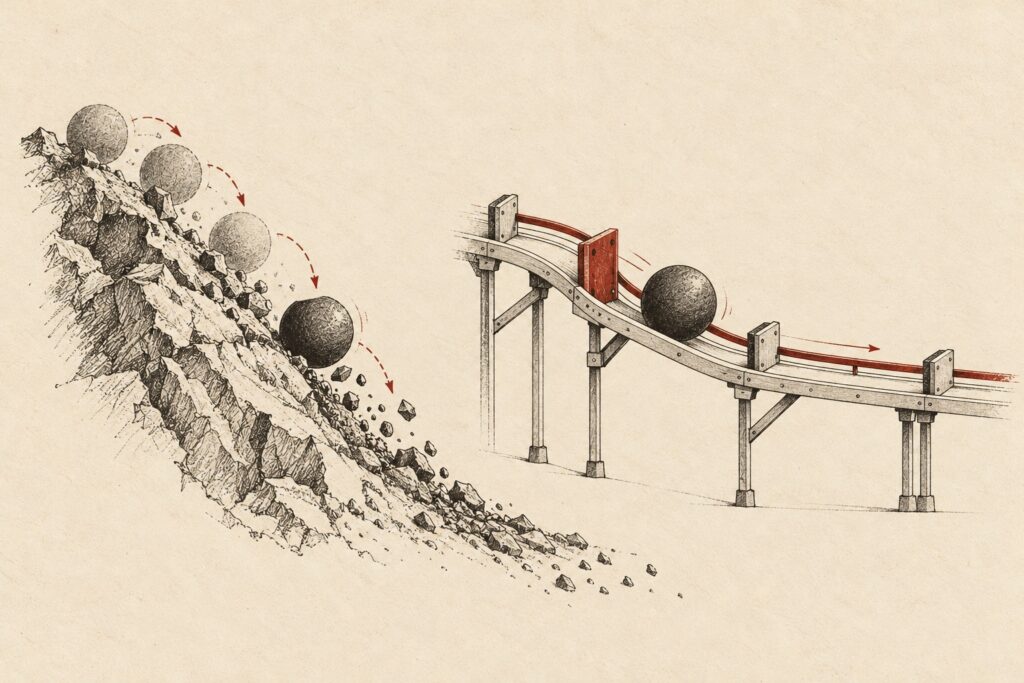
On the first Monday it took twenty minutes and felt wonderful: every task reviewed, the calendar checked, tomorrow mapped out in detail. By the third week it was only happening on good days. Then one Thursday ran until seven and went badly, the routine was skipped, and skipping it once quietly made it optional. A month later it had gone the way of most closing routines people try.
The reasons this happens are consistent enough to design around. The routine was too long, nothing in particular set it off, and it had no clear point at which it was over. None of that has much to do with willpower, and all of it can be settled before you begin.
Why an end-of-day routine is worth the effort
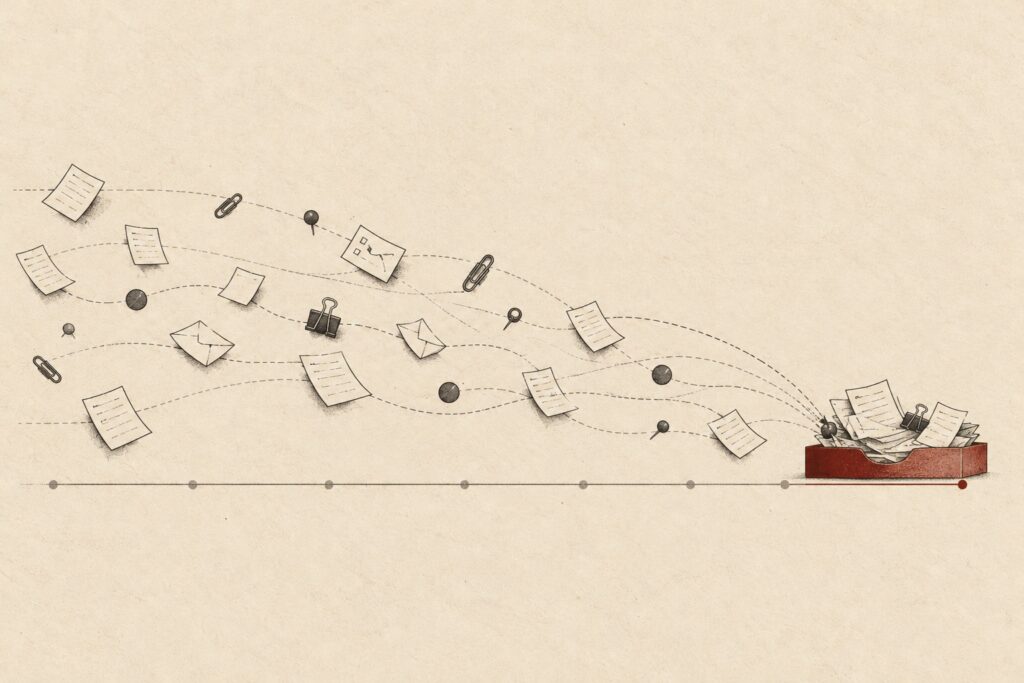
A closing routine earns its few minutes by stopping the day’s unfinished work from following you into the evening, and it does that through one specific act: writing down what happens next to each open item.
Masicampo and Baumeister found that unfinished goals kept intruding on unrelated activities, and that making a specific plan for them removed the interference before any of the work was done. For a shutdown routine, the useful part of that finding is where it puts the weight. Tidying the desk and glancing over the calendar are pleasant enough, but the step doing the real work is the line that says where each unfinished item stands and what you will do with it next. If you keep only one element, keep that one.
Cal Newport describes something similar in Deep Work: a shutdown ritual that ends with a fixed phrase, a deliberate signal that work is finished for the day rather than merely paused. Knowing what the routine is for matters on a tired Thursday, because a routine whose purpose you have forgotten is the first thing to go.
How short a shutdown routine needs to be
A shutdown routine needs to fit into about four minutes, because its length has to suit the worst evening it will face.
A twenty-minute close gets done on good days, when the work went well and there is energy left over, which are the days it matters least. On the evening that overran and went wrong, it is the first thing to be cut, and that is precisely the evening whose loose ends would otherwise come home with you.
Four steps fit comfortably inside four minutes.
Write a line for each unfinished item. Note where it stands and what the next step is, a sentence apiece for the three or four things still open. Everything else depends on this step.
Answer one question about today. Did the thing that mattered get done? A yes or a no is enough, with nothing to score and nothing to reflect on.
Choose tomorrow’s line. Write one sentence with a verb and a first move, concrete enough that you could start on it before nine.
Finish with the same physical act. Close the laptop, clear the desk and leave, in the same way each day.
Anything longer is unlikely to last. A shutdown routine of twenty minutes might survive a good month, but it rarely survives its first bad fortnight.
What should set the routine off each evening
The routine should be triggered by something that already happens at the end of every working day, rather than by a time on the clock or by your memory.
Wood and Neal describe habits as responses cued by the contexts in which they recur, which is what lets them run without a fresh decision each time. A shutdown that depends on remembering will fail on the evenings you are most tired, since tiredness tends to take the remembering with it first.
So choose a moment that recurs whether or not you are paying attention, such as the last meeting ending, the final cup of coffee, or standing up from the desk. A clock time is weaker. Once half past five has been missed, it is easy to decide the routine is off for today, whereas standing up from the desk will still happen at a quarter past seven.
The trigger also has to be specific. “At the end of the day” will not work, because on a disorganised day the end is the very thing nobody has managed to identify.
Why the routine needs a definite last step
A definite last step turns the end of work into an event, and without one the evening tends to dissolve into a long, half-working fade.
The fade looks like checking something at seven and half-thinking about a problem at nine, so that you are neither working nor recovering. It costs more than it appears to, since it produces no output and no rest.
The marker can be anything you will repeat and cannot mistake: the laptop going into a drawer, a phrase said out loud, a walk round the block. What it does is give the boundary a moment when it actually happened, instead of leaving it as something you meant to do. That is the practical difference between never working and never finishing.
How to keep the routine going on the worst days
A shutdown routine lasts when it has a smaller version for bad days and no tally of how often you managed it.
Whether a closing routine sticks depends on whether it still happens on the day that ran long, went wrong and ended at seven; a good Tuesday proves very little. Anything that takes more than a few minutes, or calls for real resolve, will not survive that kind of day.
So build the reduced version in from the start. If four minutes is too much, write the line for each open item and stop there. That takes about ninety seconds and keeps most of the benefit. A routine with a stated minimum tends to last, whereas one that is all or nothing usually ends up as nothing.
The same goes for counting. Once you keep a record of consecutive evenings, a missed one stops being a plain fact and becomes a loss, and that shift is what turns a forgiving practice into a punishing one. It is the same principle that lets a paper system be resumed after a gap without any ceremony.
Why the closing notes belong on paper
Tomorrow’s line works better on paper than on a device, because a device keeps it a single tap away from everything that competes with it.
Written into an app, the line sits beside the inbox and the messages, and the tap that opens them will happen, tonight and again first thing tomorrow. Written on a page left on the desk, it is the first thing you see in the morning, with nothing else beside it.
Doing the routine on a device carries a further cost. Opening it to write the close brings back the very inputs you were trying to shut down, and that is how a four-minute routine stretches into forty minutes of drifting before it is quietly abandoned.
The Do One Thing diary is built for this end of the day, with a printed page holding one line for tomorrow, a little space for parked items, and nothing to check or maintain. It can be used at nine in the evening because it asks almost nothing of you at that hour.
A routine can only do so much, though. If you are worn out evening after evening for weeks however cleanly the day closes, or your sleep and appetite have changed, that is worth talking to a doctor about, and adding steps to the routine will not fix it.
A closing routine can be brief and still work. It needs to be short, set off by something that always happens, and finished in a way you could never mistake for still working.