
How to Protect an Hour Inside a Day You Don’t Control
When the interruptions are people who genuinely need you, the usual advice on boundaries breaks down. A small block, decided the night before, still works.
ReadThe Notes
Short essays on focus, decisions, and the quiet discipline of doing one thing at a time.
When the interruptions are people who genuinely need you, the usual advice on boundaries breaks down. A small block, decided the night before, still works.
Read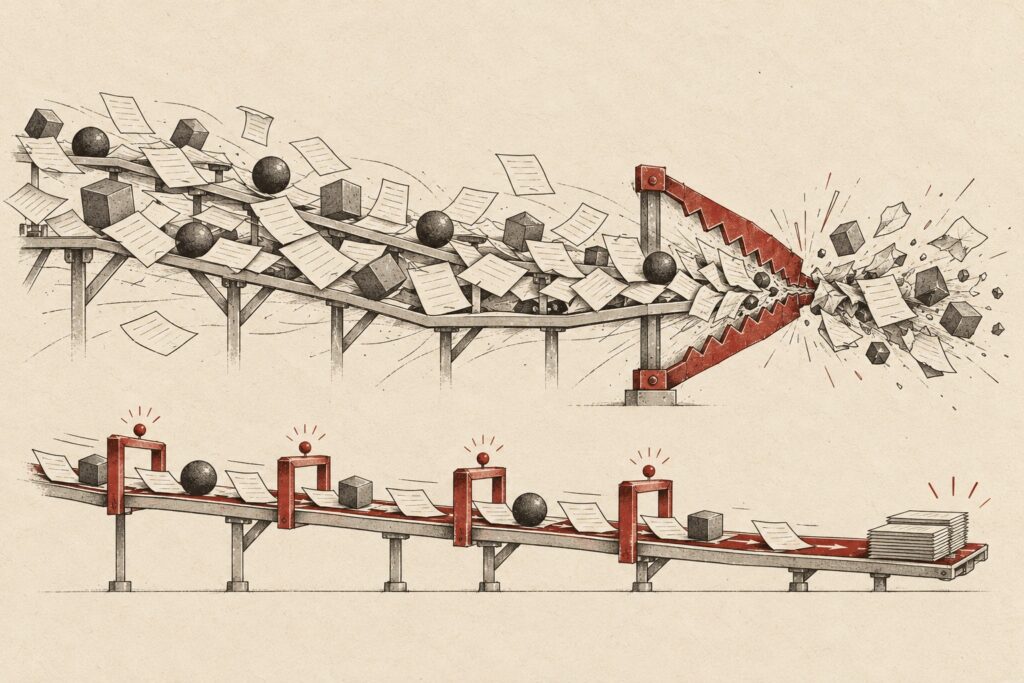
A deadline narrows attention onto whatever is nearest, which is often different from what matters. The difference shows up in the quality of the work.
Read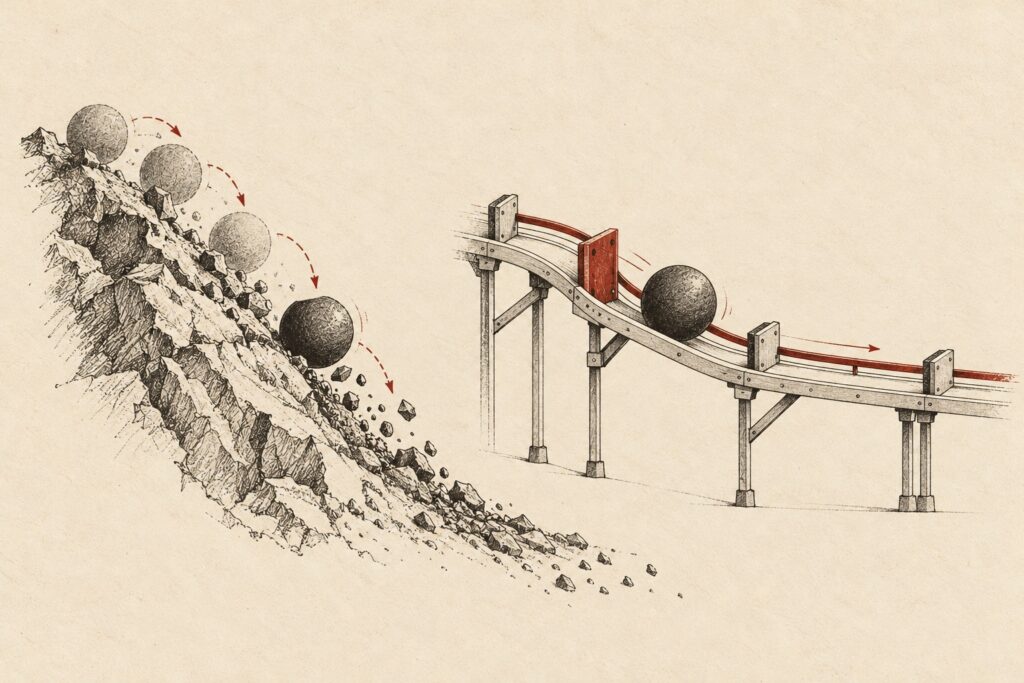
The people who seem most disciplined mostly have fewer internal arguments to win, because their days are arranged so that fewer decisions come up.
Read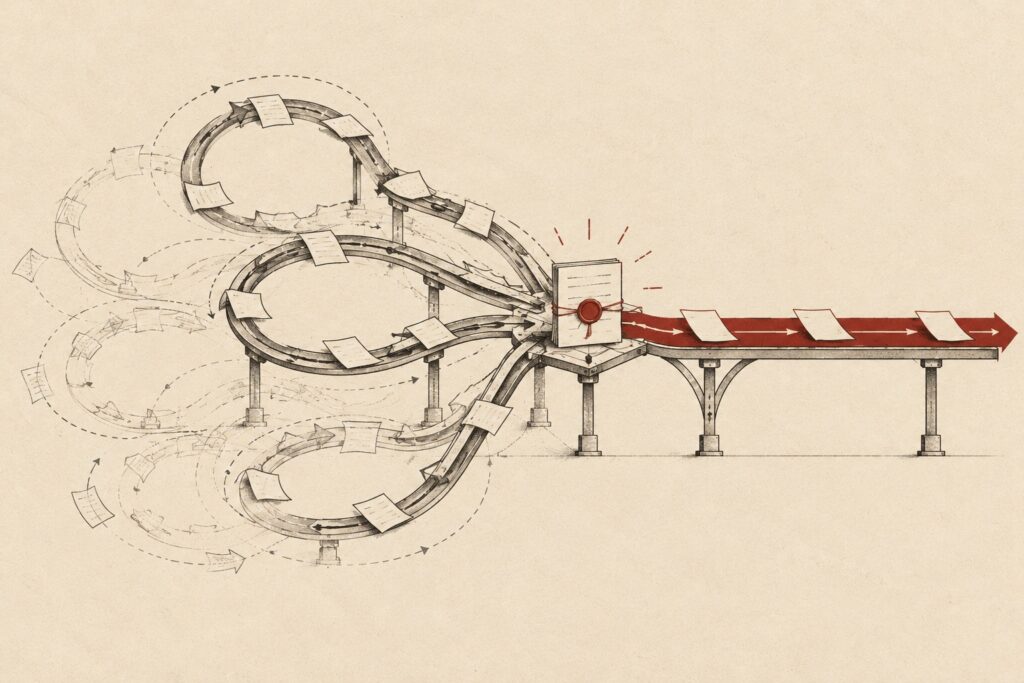
A decision that was never written down gets argued again every time the question comes round. Four short lines on paper are usually enough to settle it.
Read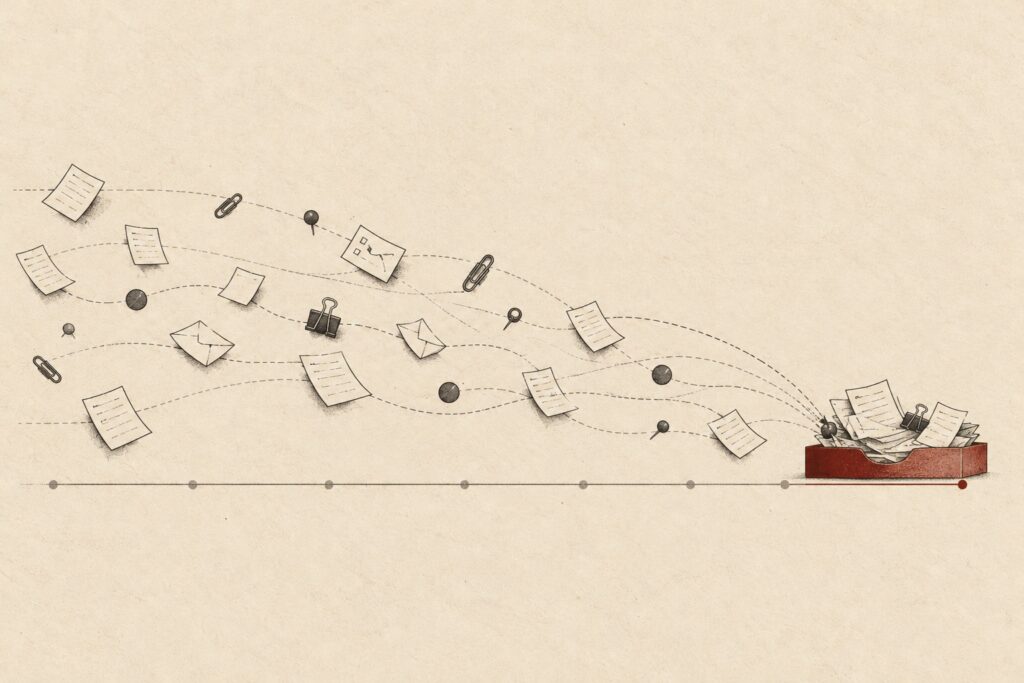
Most closing routines are dropped within a month because they run too long, lack a trigger and never clearly end. A four-minute version avoids all three.
Read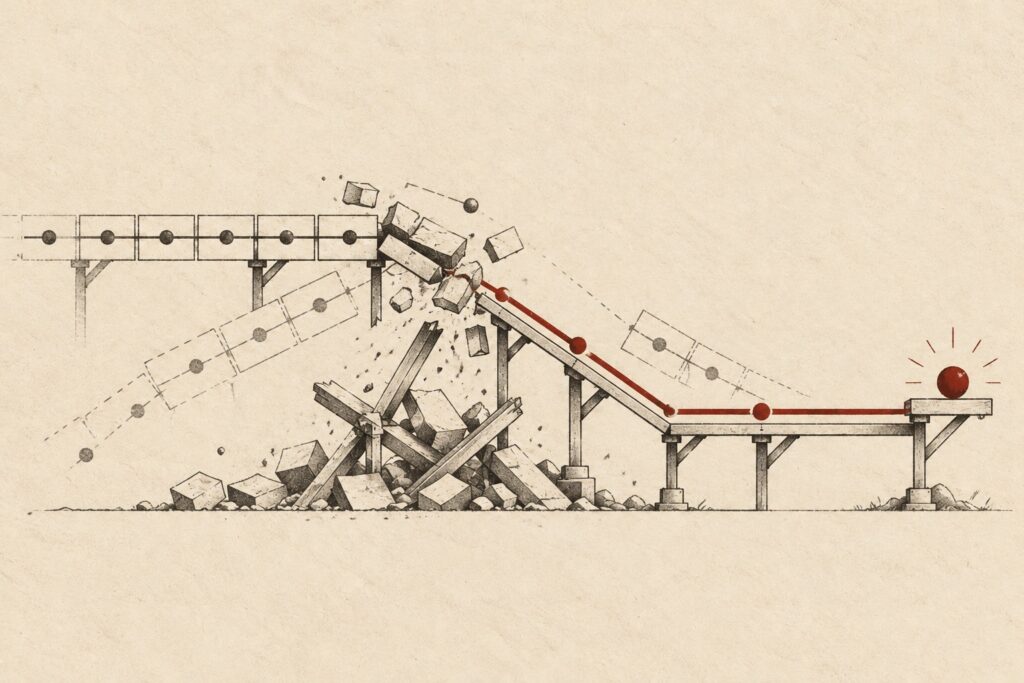
Small admin jobs do most harm by breaking into the hours that need continuity. A single fixed window late in the day keeps them contained.
Read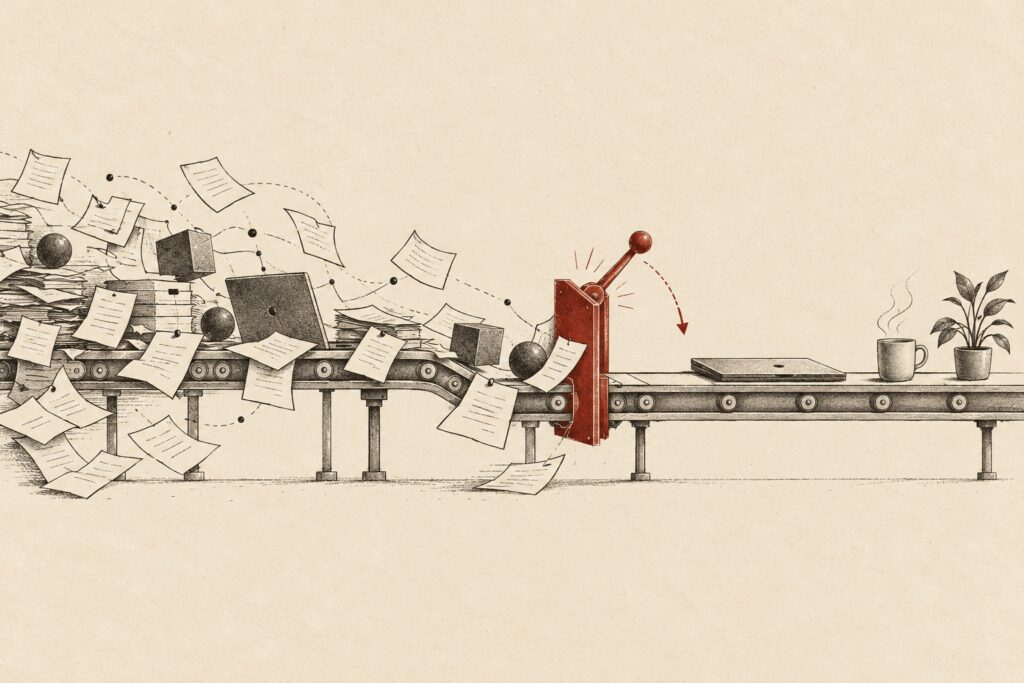
Most working days are abandoned when the energy runs out. A deliberate ten-minute close is what turns an evening away from work into actual rest.
Read