The Memo That Killed the Meeting: Why Amazon Banned PowerPoint Where the Stakes Were Highest
Picture the most important meeting at one of the largest companies on earth. Senior leaders file in. There is no projector warming up, no clicker, no title slide with a stock photo…

Picture the most important meeting at one of the largest companies on earth. Senior leaders file in. There is no projector warming up, no clicker, no title slide with a stock photo of a sunrise. Instead, everyone sits down and reads in silence for half an hour. Only then does anyone speak.
This is how Amazon runs the rooms where its biggest decisions get made, and it is a deliberate rejection of the thing most organizations treat as the default unit of corporate communication. In his 2017 letter to shareholders, Jeff Bezos was blunt about it: “We don’t do PowerPoint (or any other slide-oriented) presentations at Amazon. Instead, we write narratively structured six-page memos.” The meeting opens with what he called a kind of “study hall” — everyone reads the memo, in full, before discussion begins.
It is easy to file this under executive eccentricity. It is more useful to read it as a precise diagnosis of a problem most of us have stopped noticing: the way busyness impersonates progress.
The slide deck as status theater
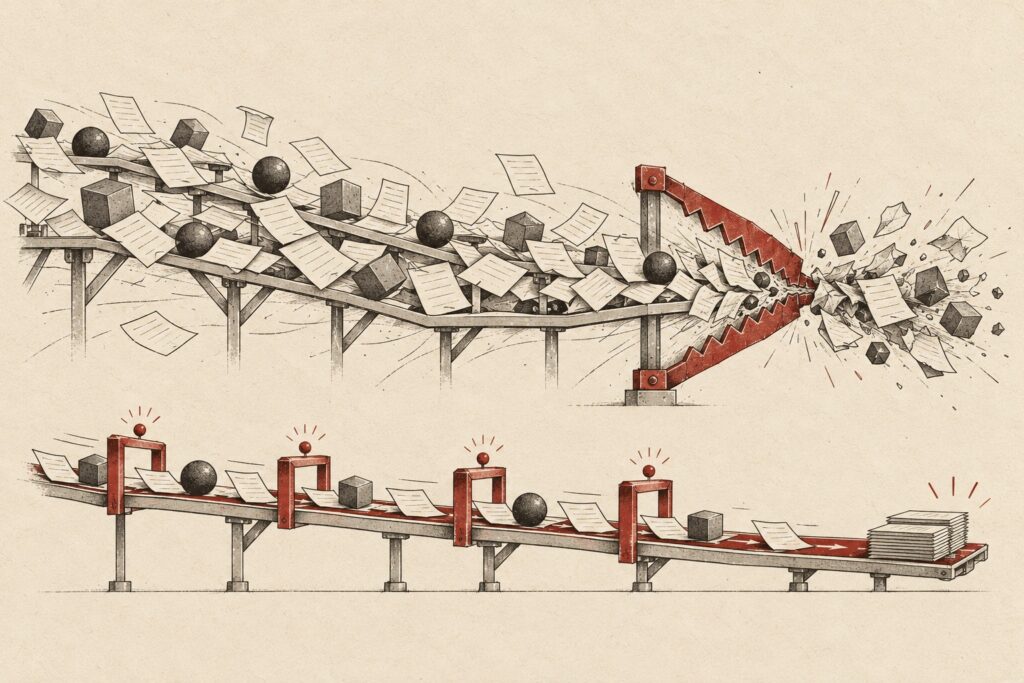
A presentation is a performance, and performances reward the performer. The person at the front of the room controls the pace, the framing, and the silences. Bullet points arrive one at a time, stripped of the connective tissue that would let you see whether the argument actually holds together. You nod along not because the logic is sound but because the slide has already advanced.
This is the heart of Edward Tufte’s argument in his essay “The Cognitive Style of PowerPoint,” pointedly subtitled “Pitching Out Corrupts Within.” Tufte, a statistician at Yale and one of the most respected thinkers on the visual display of information, argues that the slide format degrades reasoning itself. Bullet points, he contends, are too thin to carry logical relationships; they fracture an argument into fragments and ask the audience to reassemble it on faith. Information that should sit side by side, where it can be compared, is instead doled out across a relentless sequence of slides. The result, in his memorable phrasing, is that the medium routinely weakens verbal and spatial reasoning and, where numbers are involved, corrupts statistical analysis almost entirely.
What Tufte describes is not a tooling problem. It is a thinking problem dressed up as a productivity tool. A deck can look immensely busy — forty slides, animations, a confident presenter — while containing almost no defensible reasoning. It is the perfect artifact of status theater: maximum motion, minimum commitment.
Writing forces the work that slides let you skip
The six-page memo exists because it is hard to write. That is the entire point.
Bezos has been candid that a good narrative memo can take a week or more to produce, and that the difference between a great one and a mediocre one is enormous and obvious. You cannot hide a weak idea inside full sentences the way you can hide it behind a bullet. Prose demands that you state the claim, supply the evidence, and connect the two — and if the connection isn’t there, the gap is visible to everyone in the room. Writing, as the old observation goes, is how you find out whether you actually understand something. The memo simply moves that reckoning forward, from the meeting to the desk, before anyone’s time is spent.
The silent reading at the start of the meeting closes the loophole that even good documents leave open. We have all claimed to have “skimmed” the pre-read. By making everyone read together, in the room, Amazon guarantees that the conversation starts from genuine shared understanding rather than from who happened to do the homework. The thirty quiet minutes are not lost time; they are the meeting. What follows is decision-making rather than information transfer — argument, objection, and judgment, conducted among people who have all actually engaged with the same case.
Notice what has been removed: the theater. No one earns credit for charisma at the whiteboard. The idea has to stand on the page.
The same instinct, scaled
This is not an isolated quirk. It rhymes with another famous Amazon norm — the “two-pizza team,” the rule that a team should be small enough to be fed by two pizzas. Both ideas attack the same enemy. Large meetings and large teams generate enormous amounts of coordination, signaling, and motion, much of which feels like work and produces nothing. A two-pizza team is small enough that everyone is accountable and no one can hide in the crowd. A six-page memo is short enough to be read in one sitting and demanding enough that it cannot be faked.
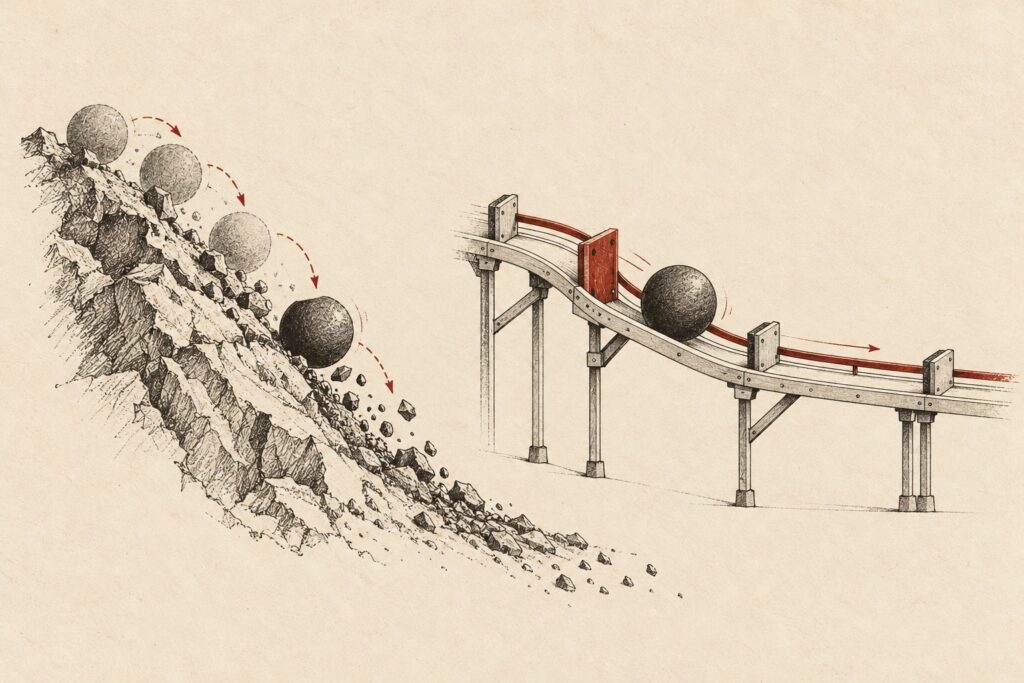
In both cases the constraint is the feature. The discipline isn’t to do more; it’s to subtract everything that lets effort masquerade as outcome. Strip out the slides, shrink the team, and what remains is the actual substance of the work — the reasoning, the decision, the one thing that needed to happen.
What this means for the rest of us
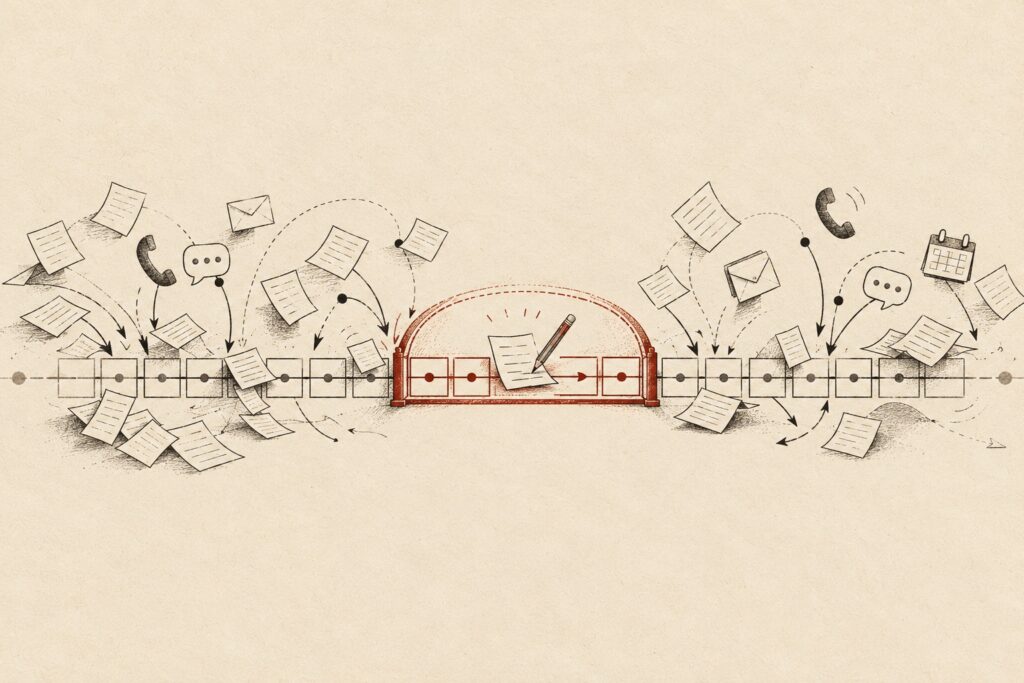
Most of us will never run a meeting at Amazon’s scale, and the lesson isn’t really about meetings. It’s about the seductive comfort of busyness. A packed calendar, a long to-do list, a deck with forty slides — these all feel productive precisely because they are visible and effortful. But visible effort and meaningful progress are different things, and the gap between them is where days disappear.
The memo is valuable because it forces a single question to the front: what is the actual argument here, and does it hold? That is the question busyness is so good at letting us avoid. It is far more comfortable to assemble bullet points than to sit with a hard problem until you can state it plainly. The same is true of our own work. It is easier to clear ten small tasks than to face the one task that genuinely matters and might genuinely fail.
That is the quiet logic behind doing one thing. Choosing a single most important task each day is the personal version of the six-page memo: a structure that refuses to let motion stand in for meaning. If you want a low-tech way to practice the same discipline Amazon built into its meetings, a paper diary that asks for one thing a day does much the same work — it makes you write the decision down, in plain words, where you cannot hide from it.
Amazon didn’t ban PowerPoint because slides are ugly. It banned them because the most expensive thing in any room is a confident argument that no one has actually checked. The cure was not a better tool. It was the willingness to sit in silence, read carefully, and do the one thing the meeting was for.