Deadlines Don’t Create Focus, They Create Panic
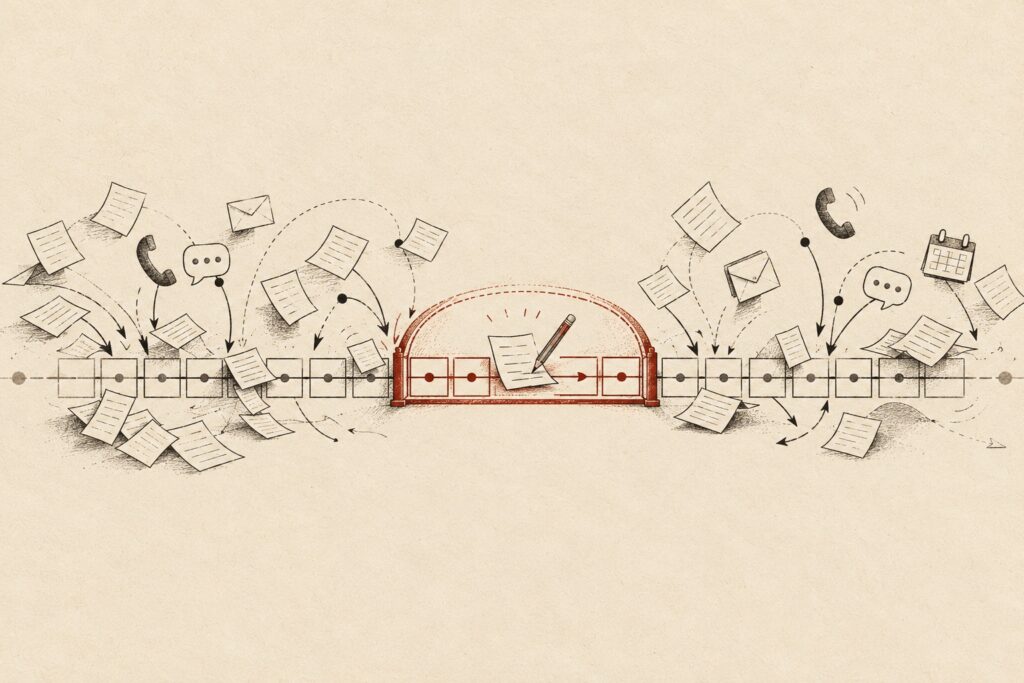
A deadline narrows attention onto whatever is nearest, which is often different from what matters. The difference shows up in the quality of the work.

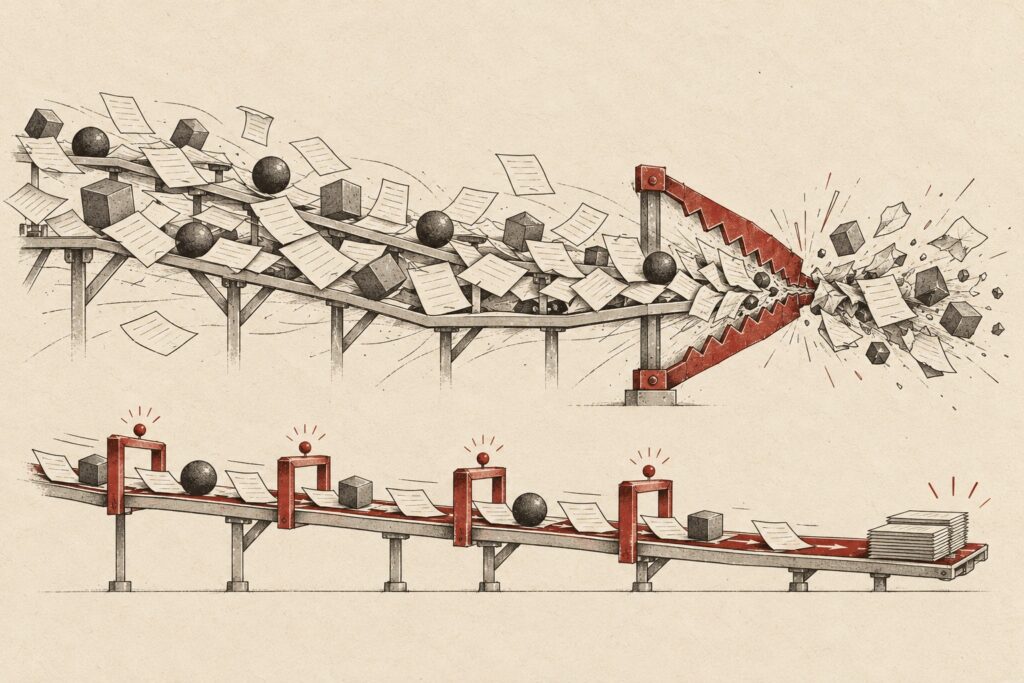
The report is due at five, and at three o’clock something changes. The messages go unanswered, the second coffee goes cold, and you write more in the next ninety minutes than you managed all week. Afterwards it is tempting to conclude that you work best under pressure, and plenty of people say exactly that: nothing concentrates the mind like a deadline, so leave things late and the pressure will supply what discipline did not.
Something real does happen in those last hours, and they are plainly different from the hours before. The question worth asking is whether what happens in them is focus, or something that only resembles it from the inside.
What a deadline actually narrows your attention onto
A deadline narrows your attention onto whatever is closest in time, which overlaps with what matters only some of the time. The narrowing itself is real, and it is the reason the folk theory survives.
Under a deadline, everything with a near horizon gains weight and everything with a distant one loses it, whatever the consequences of each. The selection runs on imminence, and imminence lines up with importance only by coincidence. A task due at five beats a task that will shape the next six months, simply because one of them has a time on it.
Zhu, Yang and Hsee’s studies of what they named the mere urgency effect showed people taking on tasks with short deadlines in preference to important tasks with better payoffs, even when the better payoff sat plainly in front of them. For this argument, the telling part is that last clause. The pull towards the nearer task held even with the better option in full view, so seeing the trade clearly is not enough to correct it.
That is the precise sense in which deadlines don’t create focus. They create a strong preference for whatever is closest, which feels like concentration while it is happening and frequently points at the wrong thing.
What happens to creative thinking under time pressure
Creative thinking under time pressure usually got worse in a large diary study of creative work, and the exceptions depend on whether the day was protected. That is a stronger claim than the one about choosing tasks, because it concerns the quality of the work itself.
Teresa Amabile, Constance Hadley and Steven Kramer’s Creativity Under the Gun drew on more than 9,000 diary entries, written day by day by 177 employees whose projects called for creative thinking. Managers often believe a tight clock brings out people’s best ideas; on the whole, those diaries suggested the reverse.
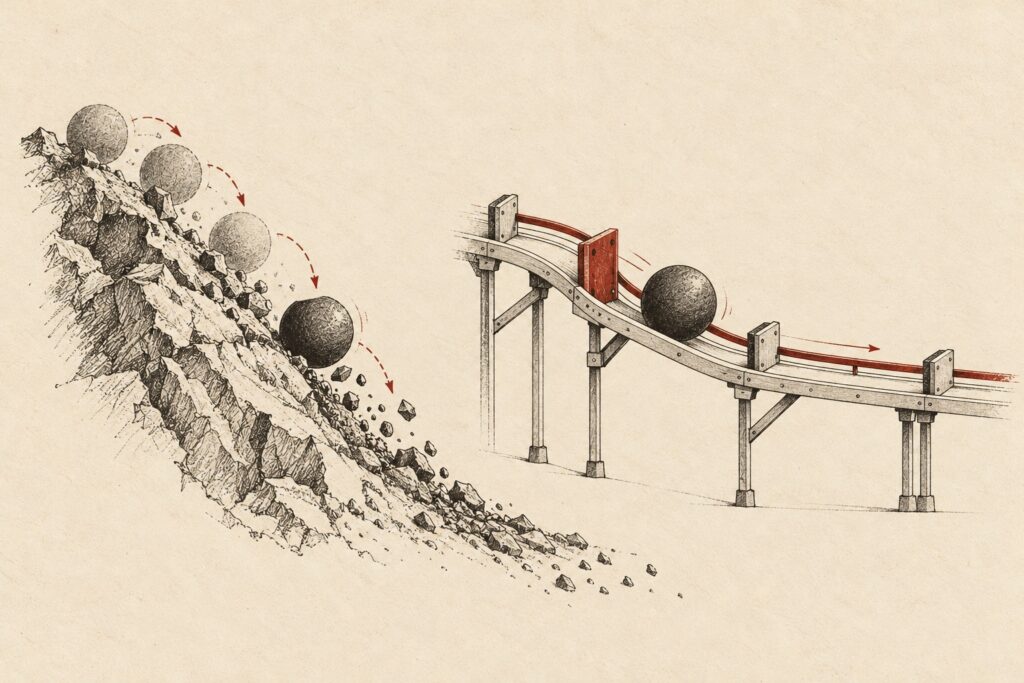
What makes the study useful here is how the pressured days differed from one another. The pressured days without creative thinking were described as a treadmill, with constant switching between tasks. The pressured days that still produced creative thinking were described as a mission, with people shielded from distraction and working on a single thing.
A deadline supplies the pressure in that picture and none of the shielding. Left to itself, it tends to produce the treadmill version, because the same urgency that pins you to your deadline is pinning everyone around you to theirs, and their deadlines arrive in your inbox.
The costs of deadline work that show up weeks later
Even when a deadline produces the output on time, some of its costs only arrive later, and they rarely get counted against it.
Work done in a compressed window is often the version that ends up being redone. Decisions made in the last two hours are made with whatever information happens to be to hand rather than whatever could have been found with another day, and the shortcuts taken to finish become the problems someone spends a fortnight unpicking in March.
There is also the question of where those last frantic hours come from. They are taken from everything else, and usually from the quiet, important work that has no date attached. A working life organised around deadlines therefore tends to be one in which nothing without a deadline ever gets done, which describes rather well how large projects manage never to start.
What deadlines are genuinely good for
Deadlines are genuinely good at coordination, and nothing here argues for getting rid of them. They let other people plan around you, they give an open-ended intention an edge, and they force a decision about scope that would otherwise be put off indefinitely.
Those are real functions, and largely administrative ones. Deciding what matters is a different job, done by a person and done in advance. Handing that job to a deadline means handing it to whoever happened to set the date.
Why small weekly commitments work better than one distant deadline
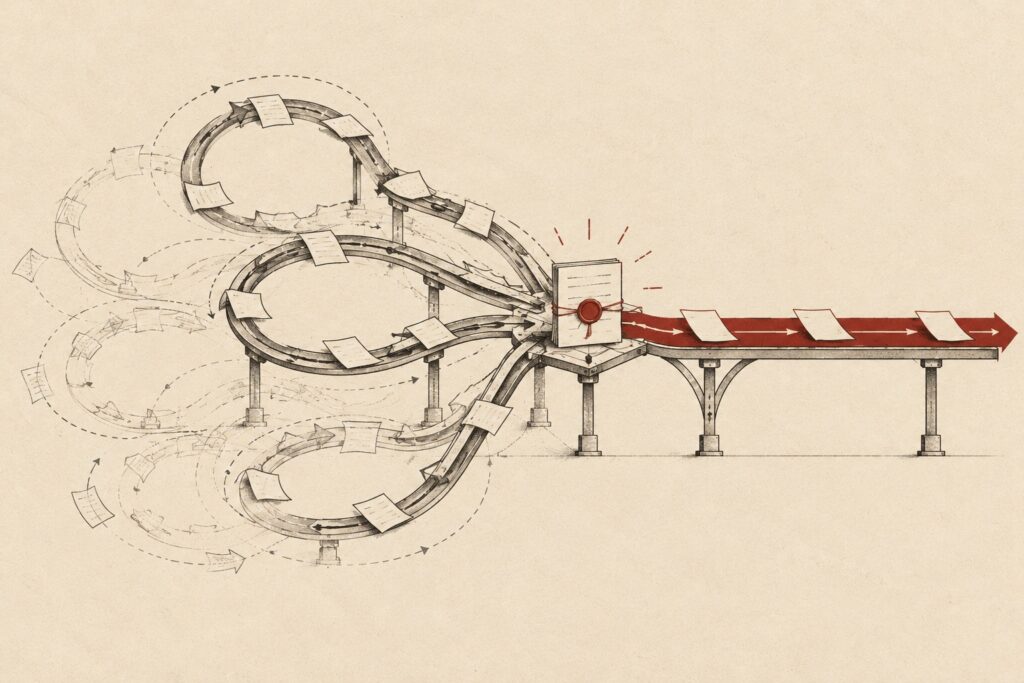
Small weekly commitments work better than one distant deadline because each one is too close to postpone and small enough to finish. A single deadline three weeks away tends to produce two and a half quiet weeks followed by a dreadful final Thursday. The same three weeks divided into a specific weekly output, such as a section, a full draft or one decision made, produces steadier work and no last-minute crush.
The difference comes from timing rather than motivation. A distant, large commitment can always be pushed to next week, while a near, small one runs out of room to slide almost as soon as it is set, and it ends in something you can see is finished.
Each of those finishes counts for something. In their later study of workers’ diaries, Amabile and Kramer reported that, of everything that happened in a working day, progress on meaningful work went most often with the good days. A run of weekly commitments builds several such days into a project, whereas a lone deadline supplies one, at the very end, after the worst week.
Why the day’s priority should be chosen before the deadlines are in view
The day’s priority should be chosen before the deadlines are in view, because at nine in the morning, with every due date on the screen, you end up weighing something important against something with a time attached, and the mere urgency effect predicts which one tends to win.
Decide it the evening before instead, when nothing is pressing, in a single line with a first physical step. The morning then holds a decision already made rather than a contest. The deadlines still exist and still get met; they simply stop being the thing that chooses what your day contains. That is the practical case for naming tomorrow’s one thing tonight rather than sorting the list by due date.
It also changes what happens when a real emergency turns up. With something already chosen, the interruption becomes a visible trade that you can accept or decline, which is most of what handling a collapsed day comes down to.
We built the Do One Thing diary to hold one printed line a day, written the night before. It has no due-date column and no way to sort by urgency, so the page can only record what you decided mattered, whatever else happens to be closest.
The last two hours before a deadline are usually your fastest work, spent on whatever was nearest. The work you will be glad of later tends to come from the quieter hours before them, and those are the hours a deadline-driven week gives away first.