How to Plan Tomorrow in Ninety Seconds Tonight
The whole of tomorrow’s planning fits in a minute and a half, done at the right moment. Anything longer is usually elaboration rather than planning.

Most planning advice asks for more time than anyone reliably has, which is a large part of why so many planning systems are quietly dropped by the third week. Twenty minutes every evening sounds reasonable when you set it up, and much less reasonable on a Wednesday when the day overran and you are tired. The version that lasts is short enough to do at the end of a bad day, without any sense of occasion.
Ninety seconds turns out to be enough. Here is what fits into that minute and a half, and why keeping it so short makes the planning work better.
Why the evening is a better time to plan than the morning
The timing matters more than anything you write, so it is worth settling first.
At the end of a working day you know almost everything about it: what actually happened, what got pushed aside, and which jobs turned out harder than they looked at nine o’clock. That is the best evidence you will have for deciding what tomorrow should hold, and it is freshest in the last few minutes before you stop.
By tomorrow morning most of it will have faded, replaced by a new set of inputs, several of them dressed up as urgent, and a decision to make under exactly the conditions that produce poor ones. The reason to plan tomorrow tonight has little to do with discipline. The evening version of you simply knows more, and is under less pressure, than the person who will sit down at the desk tomorrow.
How the ninety seconds divide into three short steps
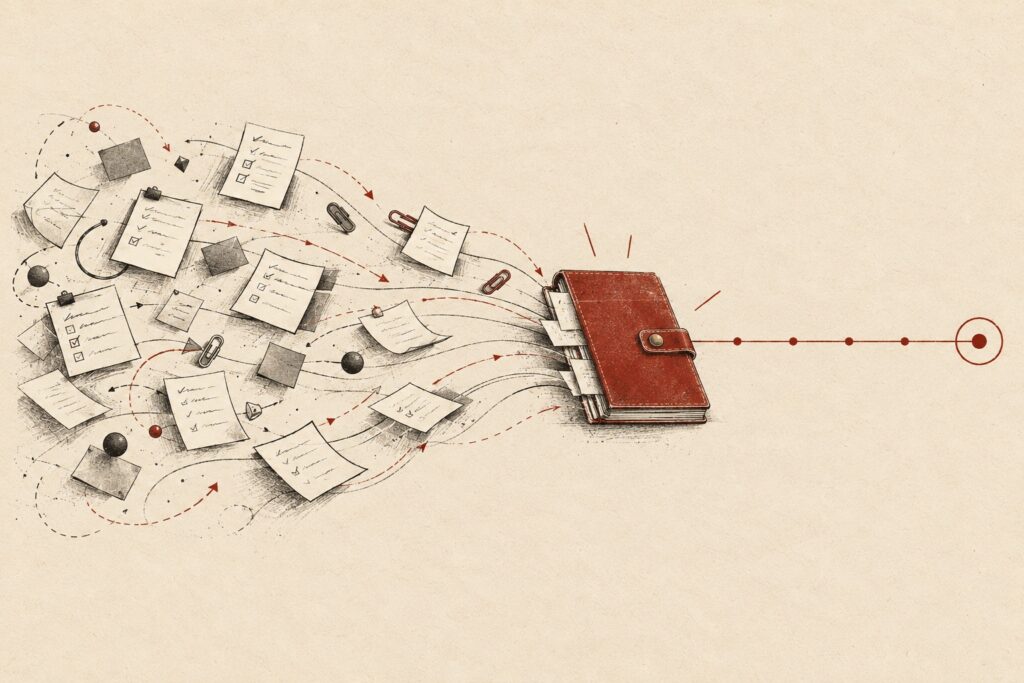
The first thirty seconds: park whatever is still open.
Take each unfinished thing in turn and give it a single line saying where it stands and what its next action is. Three or four items, a sentence each, is plenty. You are not planning these items so much as leaving a handover note for them, so that they stop asking for your attention once the laptop is closed.
That step comes first for a reason. Masicampo and Baumeister found that unfinished goals kept intruding on people’s thoughts while they were busy with something else, and that making a specific plan for those goals cleared the interference before any of the work had been done. For a routine this short, that means half a minute of writing down next steps is what gives you the evening back.
The next thirty seconds: mark today honestly.
Ask whether the one thing that mattered today got done, and answer yes or no. Leave out scores, percentages and paragraphs of reflection. A question with only two possible answers is one you can still answer when tired, and over a fortnight a column of plain yeses and noes becomes a record you can actually read.
The last thirty seconds: name tomorrow’s one thing.
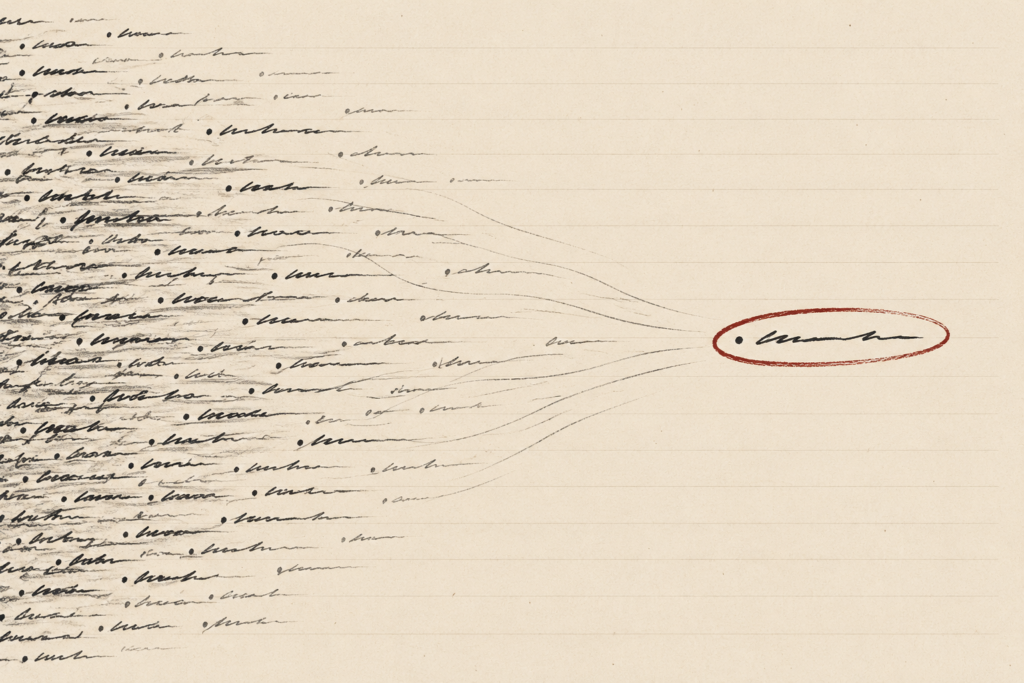
Write one line containing a physical action rather than a topic, so that work on the report becomes draft the opening section. If you cannot yet say what the first action is, the choosing is not finished, and the extra fifteen seconds it takes to reach a verb is the most valuable part of the whole exercise.
the ninety seconds
Why the line needs a specific first action
The reasoning behind that last step comes from Peter Gollwitzer’s work on implementation intentions. People in his research followed through more reliably when they had decided in advance when, where and how they would act, framed as an if-then plan, than when they simply held the goal in mind. A line written the night before is a small plan of exactly that kind. It names the action, and the morning supplies the moment.
That is why ninety seconds can do more than an hour of planning. An hour tends to produce structure, in the form of blocks, sequences and estimates. Ninety seconds produces a cue and an action, and those are what predict what you will actually do the next day, even though the hour feels far more impressive.
It also explains why vague nightly notes fail. Make progress on the proposal gives you no trigger, no first move and no point at which you are finished, so the next morning it loses to anything that has all three.
Why spending longer on the plan rarely helps
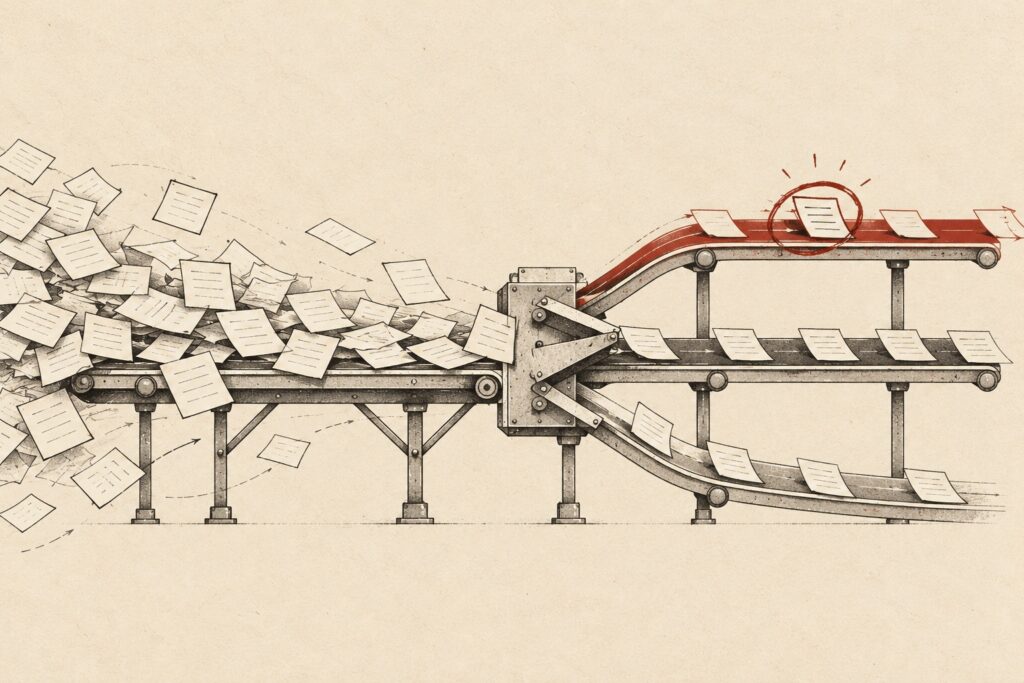
There is also a reason not to stretch the exercise. Buehler, Griffin and Ross, in their work on what is now called the planning fallacy, found that people underestimate how long their own tasks will take, and keep doing so even when they know that similar tasks have overrun before. A detailed schedule for tomorrow is therefore a careful description of a day that is unlikely to happen.
More time spent planning gives you a more precise version of that same hopeful day, and the precision makes it fragile. One meeting that runs long can knock a sequenced schedule out of order for the rest of the afternoon, whereas a single line survives an ordinary bad day with nothing to rearrange. That fragility is a large part of why tightly planned days collapse more completely than loose ones.
Planning a day you cannot predict
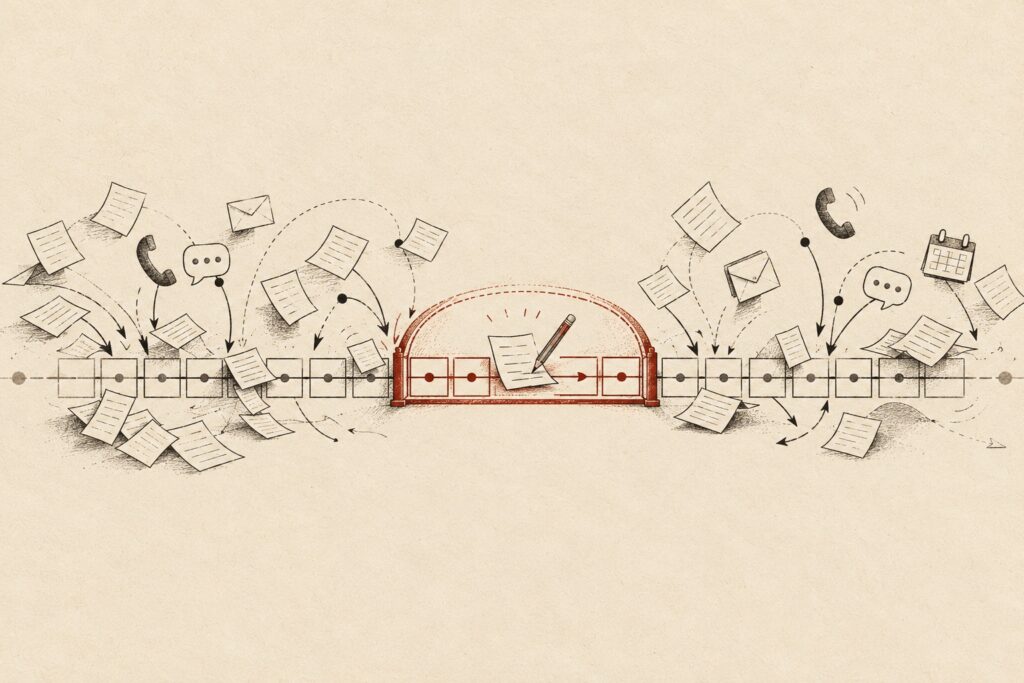
Some days cannot be planned in any detail, because the calendar belongs to other people or the work simply arrives when it arrives. The exercise still applies on those days, at a smaller scale. Name the one thing you will protect if any gap appears, even a gap of twenty minutes. Most such days do produce at least one unclaimed stretch, and whether you use it or lose it depends almost entirely on whether something was already decided. When nothing was, the gap fills with whatever happens to be closest.
On the days when there is genuinely no room at all, write that down as well. Three of those in a row tell you something about how your week is arranged, and you will only see the pattern if you recorded it.
What to do after a night you skipped it
You will miss evenings, and the practice has to survive that without any ceremony.
A missed evening does far less damage than the conclusion people tend to draw from it, which is that the system has lapsed and will need restarting. That conclusion is how a single gap turns into a lost fortnight, and it is the point at which most planning habits end. They seldom end because the practice stopped being useful; having broken it once, picking it up again simply feels faintly illegitimate.
Nothing actually needs restarting. The next evening you write a line as usual, the page for the missed night stays blank, and the blank is an honest record that costs you nothing to leave.
Where to write the line so you see it first
The last detail is where the line lives. The note needs to be somewhere you will see before anything else tomorrow, and somewhere that has nothing else to show you. Written on a phone or a laptop, the line sits one tap away from the inbox that will bury it by half past nine. Written on paper and left where you work, it is the first thing you meet in the morning, and nothing on the page competes with it.
That is why the practice fits so naturally with protecting the first hour. The decision is made at the close of one day, and the next morning only has to carry it out before the day’s messages are opened.
We designed the Do One Thing diary around this ninety-second shape: a printed page with room for one line, written in the evening and crossed out once it is done, with a short review on Fridays. It has no room for a schedule, which is exactly why it keeps working through an ordinary, overrun week.
Those ninety seconds hold the part of planning that changes what you do tomorrow. Everything an hour adds on top of that is mostly the pleasant part, and the day rarely misses it.